https://www.ahbitt.com/the-ultimate-guide-to-mastering-popular-ball-sports/
As one of the most influential sports events in the world, the NFL’s complex and unique rules often confuse beginners. This article will analyze the basic rules of NFL in a concise and easy to understand way, taking you quickly into this sport full of power and strategy.
1. Venue: 120 yard intense battlefield
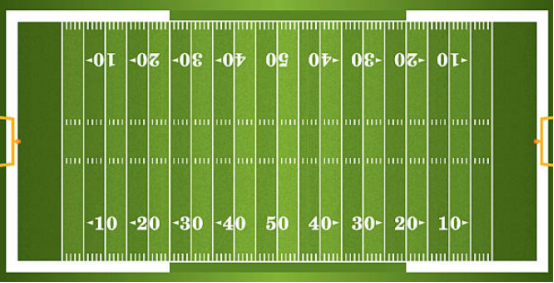
The NFL game field is 120 yards long (approximately 109.7 meters) and 53 yards wide (approximately 48.5 meters), consisting of a central 100 yard field and end zones of 10 yards each at the ends. There are horizontal lines every 5 yards on the field, and every 1 yard is marked with two columns of short lines, which are used to determine the advancing distance during the attack.
Line of Scrimmage: During each attack, the horizontal line where the rugby ball is located is the line of scrimmage, and the attacking team needs to start pushing from here.
Scoring area: The two end areas are the core areas for scoring, which can be scored by either a touchdown (a player carrying the ball into the area) or a shot (kicking the ball between the goalposts).
Out of bounds rule: If any part of a player’s body touches the bottom line or outside the sideline, it is considered out of bounds and the game is suspended.
2. Match time: Four quarters of attack and defense and overtime
The regular time of NFL games is divided into four sections, each 15 minutes long, with a total duration of 60 minutes. There will be three pauses in each half for the team to adjust their tactics. In addition, there will be an official pause two minutes before the end of the second and fourth sections for television broadcasting.
If the scores are tied after regular time, the game will enter 15 minutes of overtime. In extra time, both teams have 2 opportunities to pause, and the team that scores first wins.
3. Match players: 53 person team collaboration

Each NFL team consists of 53 players, divided into three groups:
Offensive team: responsible for dribbling and scoring, including quarterbacks, running backs, and wide receivers.
Defensive team: prevent the opponent from scoring, including linebacks, corner guards, defensive forwards, etc.
Special Operations Team: Responsible for special tasks such as kick-off, discard, and shooting.
In each game, each team can send up to 11 players to the field at the same time, and players can be freely changed between each attack to meet different tactical needs.
Attack formation rules:
There must be at least 7 players on the ball line (usually 5 forwards and 1 player on each side).
Only the two farthest players on the left and right sides are legal receivers, while the other four players must line up at least one yard behind the line of contention.
Defensive restrictions:
When the attacking team forms a discard or kick formation, the defending team is not allowed to line up directly in front of the long kickoff player, and it is prohibited to collide with the long kickoff player after kickoff.
4. Game process: Four level attack and ball ownership transfer

The core of NFL games is the intense confrontation between offense and defense, and the rules revolve around the “four tier offense”:
1. Attack method:
Running the ball: Players run with the ball, relying on strength and speed to break through the defense line.
Passing: The quarterback throws the ball towards his teammate and advances with precise coordination.
- Advancement objective:
The attacking team needs to accumulate at least 10 yards in four levels of attack. If successful, you will gain new opportunities for four levels of attack; If the game fails, the ball will be handed over to the defending team.
3. Tactical selection:
Fourth strategy: If the first three moves fail to advance 10 yards, the attacking team usually chooses to give up the kick (Punt), kick the ball near the opponent’s area, and switch to defense.
Free kick shooting: If the opponent’s goal is close and within the range of the kicker after third gear, a shot can be attempted and 3 points will be awarded for success. Failure will result in a transfer of possession of the ball.
The situation of ball ownership transfer:
The attacking team scores (touchdown or shot).
The fourth gear attack failed to advance 10 yards.
The attacking team dropped the ball and it was intercepted by the defending team.
The defending side intercepts the attacking side’s pass.
The attacking team’s player is captured and held within the formation area (safety score, 2 points for the defending team).
conclusion
The charm of the NFL lies in its high-intensity confrontation, complex tactics, and ever-changing game pace. Through the rule analysis in this article, you have mastered the basic logic of NFL. Next time you watch a game, why not bring this knowledge and experience the strategic gameplay of every attack and the iron walls of defense, experiencing the unique passion of American football!
https://www.ahbitt.com/the-ultimate-guide-to-mastering-popular-ball-sports/